

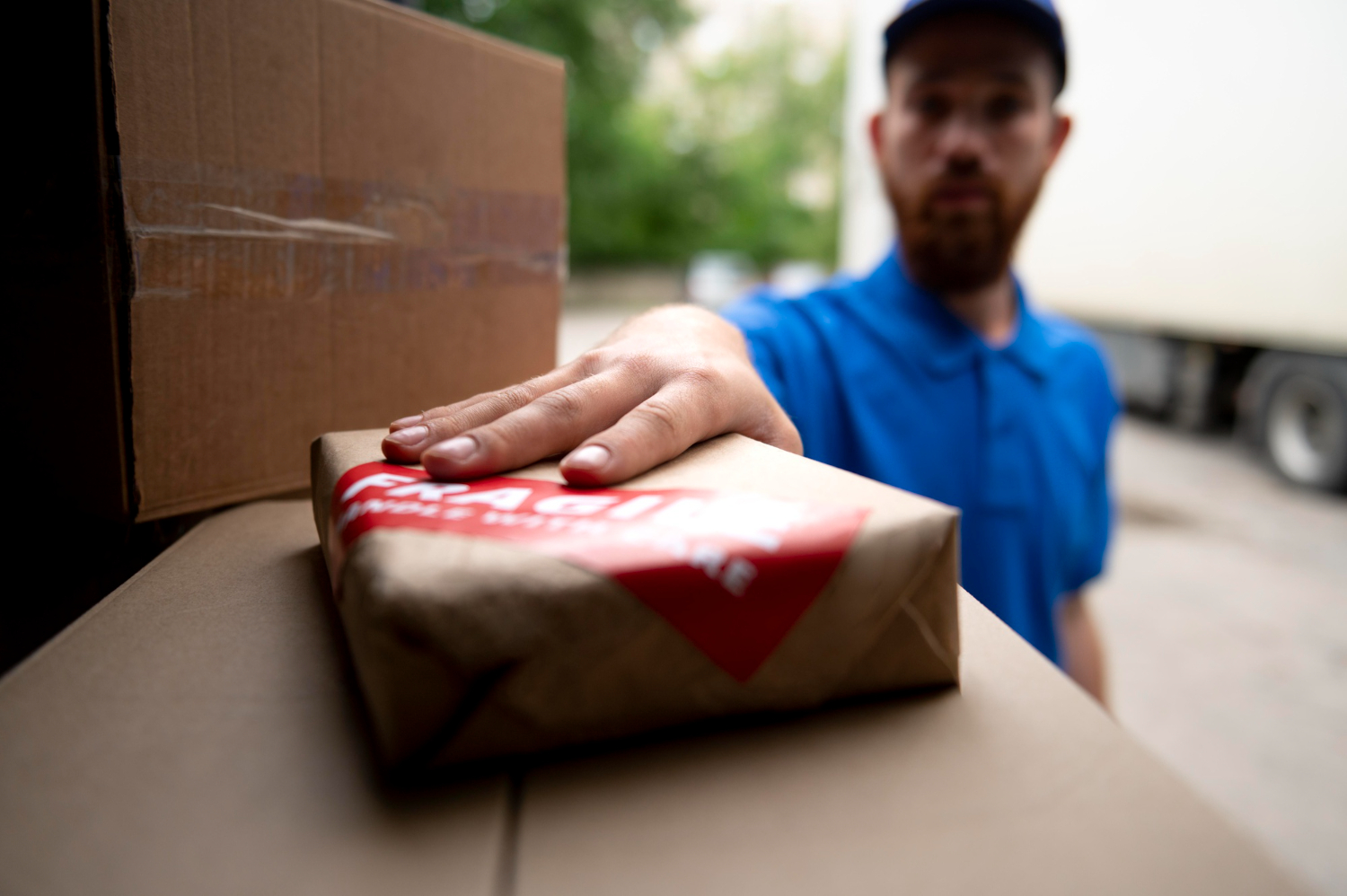
A delivery goes out as planned, and nothing seems out of the ordinary. The parcel is collected, transported and dropped off like any other job. Then later, there’s a problem. A customer reports damage. An item is missing, or a delivery is questioned after the fact.
That’s when the situation shifts, and a simple question comes into focus: what happens if goods are damaged during deliveries, and who is actually responsible?
At first, it’s easy to assume the answer lies somewhere else like with the sender who packed the item, the warehouse that handled it, or the platform that arranged the job. But once the goods are in your care, responsibility can shift quickly. And that’s where many couriers find themselves exposed.
Key takeaways:
- Responsibility for damaged or lost goods often comes down to who had the goods at the time, not who caused the issue.
- Even if damage or loss wasn’t your fault, you may still be expected to cover the cost if the goods were in your care.
- Many couriers assume the sender, platform, or warehouse will cover the loss but when a claim is made, responsibility often falls on whoever had the goods at the time of damage.
- Gaps in cover usually come from mismatches between how you work and what your insurance actually protects.
- Goods in transit cover needs to reflect the value, type and handling of the deliveries you carry day to day.
- A well-structured goods in transit policy means that if a delivery is damaged, lost, or disputed, the financial cost is covered by your insurer, not absorbed by you as the driver.
Who is actually responsible?
On the surface, it seems like responsibility should be clear. In reality, however, it all comes down to one key factor: who had control of the goods at the time.
Once a parcel is in your care, even if only temporarily, there is often an expectation that you’re responsible for it. That expectation may come from a contract, a platform agreement, or simply the way the job is structured.
This is where it catches many drivers off guard. Because even if the issue wasn’t directly your fault, that doesn’t necessarily remove your responsibility. If the goods were in your care at the time, you can still be the one expected to cover the loss, even when the problem started earlier in the chain. That’s the part most couriers don’t see coming.
If you want to understand how to prepare for situations like this before they happen, read our guide on how couriers can deal with the unexpected.
How these situations actually happen on the job
These issues don’t usually come from major incidents. Most of the time, they happen during normal, everyday work. For example:
- A parcel shifts during transit and arrives damaged.
- Goods are left in the vehicle during a stop and are stolen.
- An item is delivered, but the customer claims it arrived in poor condition.
In some cases, a delivery is marked complete, only to be disputed later as missing. None of these situations feel unusual while they’re happening. But each one can lead to the same outcome, a claim for the value of the goods. And oftentimes, that claim comes back to the driver.
What a damaged or lost delivery can cost you
The financial impact isn’t always obvious at first. For smaller items, the cost might seem manageable. But that changes quickly when you’re carrying multiple parcels, or goods with higher value.
Think about a single run where two or three items are damaged or go missing. If those goods are worth $500 to $1,000 each, the total exposure adds up fast, and without the right cover in place, that cost sits with you.
A single incident can mean:
- Paying to replace damaged goods.
- Covering the value of lost items.
- Managing disputes or claims.
When responsibility sits with you, those costs don’t get absorbed elsewhere. There’s no platform stepping in, no sender covering the gap. The expectation is that you (as the person who had control of the goods) wear it.
Why standard cover often isn’t enough
Many couriers assume they’re covered because they have some form of insurance. The problem is that general policies aren’t always built for the specific way courier work operates.
A personal vehicle policy, for example, typically won’t cover goods being transported for commercial purposes. Platform arrangements vary and what a platform says it covers in general terms often looks very different once an actual claim is assessed.
This is where gaps appear. Not because couriers are uninsured, but because the cover they have doesn’t match the work they’re actually doing.
What protection actually needs to include
Once you look at how these situations unfold, the pattern is clear. When something goes wrong during a delivery, the question of responsibility often comes back to who had the goods at the time. And in many cases, that’s the driver.
That’s what makes protection so important. The focus is making sure that if goods are damaged, lost, or disputed while in your care, the financial impact doesn’t fall entirely on you.
So in real terms, it comes down to having cover that:
- Protects the value of goods while they’re in your care.
- Reflects the type and value of deliveries you handle.
- Applies to real-world situations like loading, unloading and temporary stops.
Because when responsibility sits with you, the protection needs to sit with you as well.
Getting the right setup before something goes wrong
The time to review your cover isn’t after a claim has been made. By that point, the gap has already cost you.
A broker who understands courier and delivery work can look at how you operate, what you carry, and what your current policy actually protects and identify where the mismatch is before it becomes a problem.
If you’re not sure whether your current cover reflects the work you’re doing, it’s worth getting a proper review. Get in touch with the team at GSK Insurance to talk through your situation and make sure your cover works the way it should.
Frequently asked questions
Do I need to pay for damaged goods if I didn’t cause the damage?
It depends on your agreement. In many cases, responsibility is tied to who had the goods at the time. So even if you didn’t cause the damage, you may still be expected to cover the loss if it happened while the goods were in your care.
What happens if a customer claims an item was damaged after delivery?
These situations can be difficult to resolve. If there’s no clear proof of the item’s condition at delivery, responsibility may still come back to you, especially if you were the last person handling the goods.
Am I covered if goods are stolen from my vehicle during a delivery?
Not always. Cover often depends on how the goods were stored and whether the vehicle was secured. If policy conditions aren’t met, a claim may be declined.
How do I know if my current cover is enough for the goods I carry?
Look at the highest value you carry at any one time. Your cover should reflect your maximum load, not your average. Otherwise, you may only be partially covered if something goes wrong.